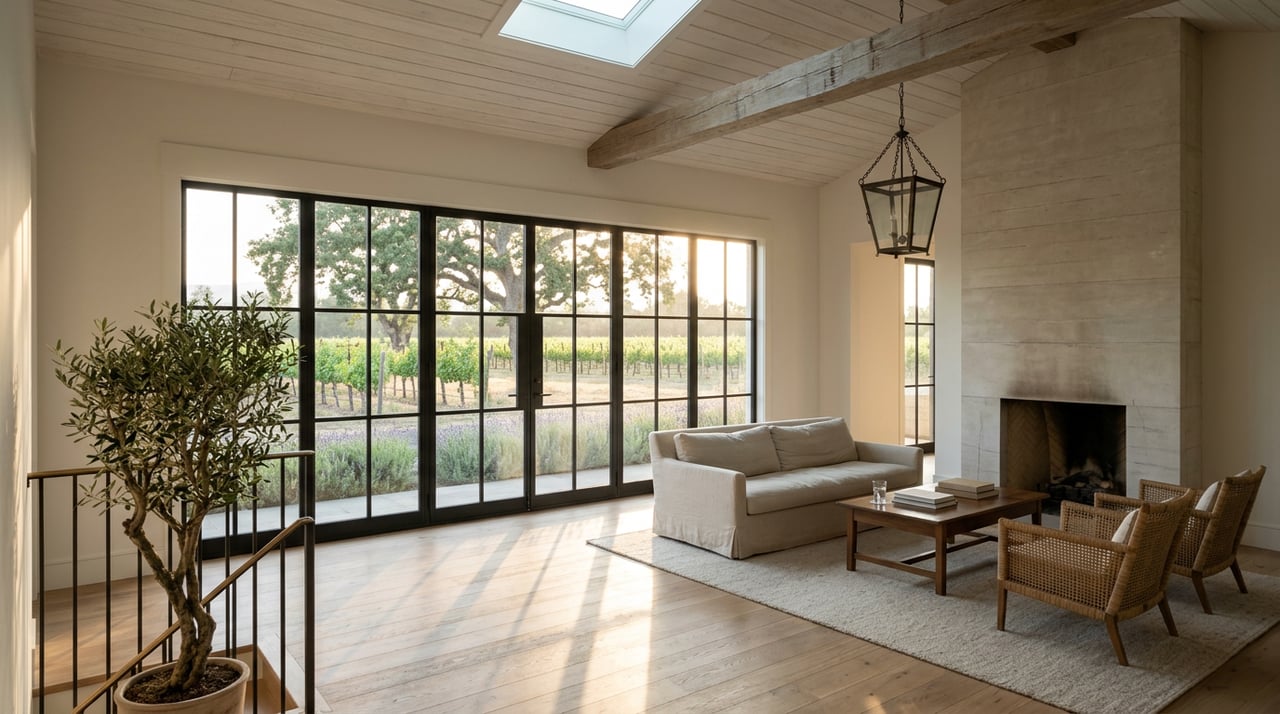
Last September, an entity called Triple Gem Estate LLC closed on a 46-acre property west of downtown Calistoga for $13.475 million. The parcel came with five homes, four vineyards, three sport courts, and a spring-fed lake, according to Napa County Assessor's Office records. The buyer was Ripple co-founder Chris Larsen, purchasing through an LLC managed by his wife, philanthropist Lyna Lam. The San Francisco Standard called it Napa's largest home purchase in more than two years.
That single transaction did something most single transactions never do. It moved the market.
Not the whole Napa Valley market. Calistoga's. And that distinction is the reason anyone shopping for a home at the top of the valley should stop trusting the median price they see on a portal without asking one more question first: how many sales is that number actually built on?
The Math Problem Hiding in a Small Town
Calistoga does not sell many homes. As of September 2026, Homes.com counted 23 closed sales in Calistoga over the trailing twelve months. Compare that to Sonoma County as a whole, which saw 406 home sales in the single month of May 2026 according to Redfin. In a county-wide market, one $13 million sale barely registers. In a town with two dozen closings a year, it can single-handedly reset the median.
That is exactly what appears to have happened. Redfin reported a Calistoga median sale price of $2.2 million for June 2025, up 84.9 percent year over year. Movoto reported a median of $1.722 million in April 2026, on 49 closings that month. Homes.com put the trailing twelve-month median at $895,000 as of September 2026, up a more modest 8 percent. Zillow's home value index, which smooths for property mix differently than a sales median, showed an average value of $1,034,270 as of January 2026, down 4.9 percent for the year.
Four sources, overlapping time windows, and a spread of more than $1.3 million between the low and high figures. That is not a data error. It is what a thin luxury market looks like when a handful of estate sales share a small pool with modest in-town cottages, and each aggregator happens to catch a different slice of that pool.
One Property, Three Prices, Three Years
The Larsen estate itself tells the same story in miniature. The property was first listed in 2022 at $18.5 million. It came back to market in spring 2025 at $14.95 million, represented by Arthur Goodrich of the St. Helena Sotheby's brokerage. It ultimately traded that September for $13.475 million, nearly a third off its original ask.
That is a $5 million swing on one property's own asking history, before a single buyer even signed. If one estate's price can move that much on its own, a town-wide median built from only twenty or thirty sales a year was never going to hold still.
The buyer's agent on the deal, Karin Narodny of Alamere Real Estate, told the Standard her clients had been searching Napa, Sonoma, and Marin for about three months looking for what she called an extended-family retreat, not necessarily a vineyard. She noted the very feature that had kept the property sitting unsold for years, its scattered outbuildings and sprawling footprint, was what drew this particular buyer in.
"The very thing that kept this from selling appealed to these buyers."
That is a useful reminder for anyone reading Calistoga listings as a category. The buyer pool for a 46-acre compound with a private lake is not the buyer pool for a three-bedroom cottage near Lincoln Avenue, and averaging their sale prices together produces a number that describes neither one.
What Gets Lumped Into One Category
Calistoga's housing stock spans a wider range than most Napa Valley towns of comparable size. Restored Queen Anne cottages and mid-century ranch homes sit close to downtown. Just outside the city limits, hillside estates and working vineyard parcels take over, some with private hot springs or panoramic views of the Palisades and Mount St. Helena. A single "median home price" for Calistoga is really a blend of these very different products, and the blend shifts every time one type sells more than another in a given month.
The vineyard side of that blend moves in its own wide range. Napa County vineyard sales tracked over a recent twelve-month period ranged from roughly $1.9 million to $30 million per property, on parcels running from a few acres up to 64 acres. A listing near Diamond Mountain Road just outside Calistoga, 53 acres with a three-bedroom home, was priced at $5.395 million, giving a sense of where a mid-size hillside vineyard parcel can land relative to that broader range.
None of that variation shows up in a single median figure. It only shows up when you ask what specific type of property sold.
Reading Calistoga the Way a Local Would
Three habits make the noise easier to filter.
First, ask what's inside the number. A quoted median or average is a blend of property types unless someone tells you otherwise. Before treating a headline figure as a market signal, find out whether the sales behind it were in-town homes, acreage parcels, or vineyard estates, and whether one large transaction is doing most of the work.
Second, look at price per acre or price per square foot for anything with meaningful land, rather than the total sale price. A $13 million compound and a $900,000 cottage are not comparable on total price, but they can be compared on a per-acre or per-square-foot basis against similar properties.
Third, watch days on market instead of price. It moves less. Homes.com reported an average of 79 days on market over the trailing twelve months as of September 2026. Movoto reported 63 days in April 2026, down from 67 the year before. Those two figures, drawn from different methodologies, land within a reasonably narrow band of each other, which makes days on market a steadier gauge of demand than a median price that one estate sale can double in a month.
A Note on Timing
The Larsen sale closed not long after the 2025 Pickett Fire burned more than 6,800 acres in Napa County, and Narodny said fire risk came up directly in conversation with her clients. She described watching a brush fire near the property get contained within minutes during a site visit, which she said reassured the family rather than deterring them. It is a reminder that buyer confidence in Wine Country real estate is shaped as much by what people see in person as by anything in the listing.
Frequently Asked Questions
Does a rising median mean Calistoga home prices are actually going up? Not on its own. In a market this small, a jump in the reported median can mean prices are rising, or it can mean one large estate sale closed that month. The safer approach is comparing similar property types against each other over several months rather than reading a single month's headline number.
How many homes actually sell in Calistoga in a given year? Recent counts put it in the low dozens, far fewer than in larger Napa Valley towns or Sonoma County overall. That low volume is precisely why any single high-value sale carries outsized weight in the aggregate statistics.
What should I look at instead of the median price? Recent comparable sales within the same property type, price per acre for larger or vineyard parcels, and days on market trends, which tend to move more gradually than price.
Calistoga rewards buyers who look past the headline number and ask what is actually behind it. If you are comparing Calistoga to other Napa Valley towns, or trying to understand what a specific property is really worth in this market, the Peterson Lawson Group can walk you through the comparables that matter. Request a Confidential Home Valuation to start that conversation.